Activity 1: Assessment. Estimated duration: 5 min
Assessment with 5 questions from Natural Selection.
5 questions assessment
Created by Katy L on
18 activities: 16 games, 2 assessments
187 minActivity 1: Assessment. Estimated duration: 5 min
5 questions assessment
Activity 2: Simulation Game. Estimated duration: 20 min
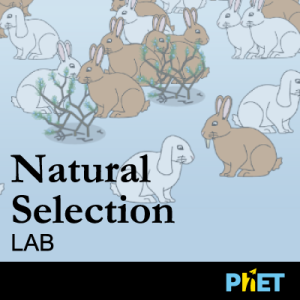
Explore how organisms with different traits survive various selection agents within the environment. Challenge yourself to determine which mutations are advantageous with various selection pressures, which mutations don't offer any benefit, and how to create a stable population of bunnies.
Teacher Ratings (20) 4.7 stars.
Student Ratings (10814) 3.5 stars.
Activity 3: Instructional Game. Estimated duration: 18 min
This is a game about artificial selection, where the player must manage a small breeding farm to populate Mars with funny little aliens. They must fulfill customer requests by breeding creatures correctly to select specific traits!

Teacher Ratings (4) 3.5 stars.
Student Ratings (455) 3.2 stars.
Activity 4: Instructional Game. Estimated duration: 15 min
A.L.O, a friendly robot from the future has come back in time in need of your help! The animals of the future are not adapting and becoming extinct! Can you use A.L.O's Adapt-O-Tron to adapt the animals correctly, making them perfectly suited to their environments? Or will you end up with a wolf with a beak or a mouse with hooves!
Teacher Ratings (36) 3.8 stars.
Student Ratings (21115) 4.0 stars.
Activity 5: Instructional Game. Estimated duration: 20 min
Take a trip to the ranch where cute little creatures known as Rabcoons (half-rabbit and half-raccoon) are being bred and cared for. Learn all about artificial selection and selective breeding, as well as their processes, advantages, and disadvantages while breeding your own species of furballs.
Teacher Ratings (7) 4.7 stars.
Student Ratings (2428) 3.9 stars.
Activity 6: Video Game. Estimated duration: 3 min
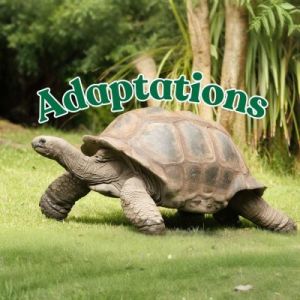
This video highlights adaptation through natural selection is the process by which species evolve to fit their environments. Traits that enhance survival and reproduction become more common over generations, while less advantageous traits diminish. Adaptations can be physical or physiological, and behavioral. This process, described by Charles Darwin, highlights the importance of genetic variation for species to thrive in diverse and changing environments.
Teacher Ratings (4) 4.5 stars.
Student Ratings (2252) 3.5 stars.
Activity 7: Instructional Game. Estimated duration: 18 min
Flinging madness! Master environment specific adaptations in this slingshot-filled puzzle game. Traverse diverse biomes whilst experiencing natural selection first hand.
Teacher Ratings (40) 4.6 stars.
Student Ratings (8790) 3.9 stars.
Activity 8: Video Game. Estimated duration: 3 min
Young scientists take a journey to explore the science of Natural Selection.
Teacher Ratings (2) 5.0 stars.
Student Ratings (1273) 3.5 stars.
Activity 9: Instructional Game. Estimated duration: 6 min
Charles Darwin will teach you about natural selection. Listen and learn as Darwin narrates his story to you. You will have to remember what Darwin teaches you so that you can apply his theories later in the game. After you complete a quiz, you will have to try keeping a species alive in its environment for 1,000,000 years. Use your knowledge to help your species adapt and survive.
Teacher Ratings (123) 3.6 stars.
Student Ratings (34443) 3.8 stars.
Activity 10: Simulation Game. Estimated duration: 10 min
Explore how organisms with different traits survive various selection agents within the environment. Challenge yourself to create a population of bunnies that survives with wolves as a selection pressure.
Teacher Ratings (5) 3.2 stars.
Student Ratings (6203) 3.3 stars.
Activity 11: Video Game. Estimated duration: 5 min
This engaging video explores the captivating realm of genetics through the lens of artificial selection and selective breeding, using reptiles as a fascinating example. Zoologist and educator Rebekah Calleja from South Florida guides viewers through the process, illustrating how humans have intervened in the natural course of evolution to selectively breed animals with specific traits, such as color variations and patterns, for various purposes. From the basics of genes to the intricacies of breeding programs, the video delves into how artificial selection differs from natural selection and its implications for species evolution. Through captivating examples from the animal kingdom, including dogs, cats, and farm animals, the video highlights both the benefits and risks associated with selective breeding, shedding light on its role in conservation, research, and human companionship. Ultimately, it invites students to ponder the evolving relationship between humans and the species we shape through selective breeding, offering a glimpse into the dynamic world of genetics and its ongoing impact on biodiversity.
Teacher Ratings (2) 5.0 stars.
Student Ratings (1209) 3.4 stars.
Activity 12: Video Game. Estimated duration: 5 min
This educational video introduces middle schoolers to natural selection, showing how animals adapt to survive in their environments over time.

Teacher Ratings (2) 5.0 stars.
Student Ratings (2294) 3.4 stars.
Activity 13: Instructional Game. Estimated duration: 12 min
A game to identify characteristics for a species that will help them survive in an environment and adapt. If a student chooses the wrong characteristic, they will die. If they choose the right one, they will flourish and prosper!
Teacher Ratings (140) 4.1 stars.
Student Ratings (44264) 4.2 stars.
Activity 14: Simulation Game. Estimated duration: 10 min
Explore how organisms with different traits survive various selection agents within the environment. Challenge yourself to create a population of bunnies that survives with wolves as a selection pressure.
Teacher Ratings (5) 3.2 stars.
Student Ratings (6203) 3.3 stars.
Activity 15: Instructional Game. Estimated duration: 12 min
A game to identify characteristics for a species that will help them survive in an environment and adapt. If a student chooses the wrong characteristic, they will die. If they choose the right one, they will flourish and prosper!
Teacher Ratings (140) 4.1 stars.
Student Ratings (44264) 4.2 stars.
Activity 16: Assessment. Estimated duration: 5 min
5 questions assessment
Activity 17: Video Game. Estimated duration: 5 min
This engaging video explores the captivating realm of genetics through the lens of artificial selection and selective breeding, using reptiles as a fascinating example. Zoologist and educator Rebekah Calleja from South Florida guides viewers through the process, illustrating how humans have intervened in the natural course of evolution to selectively breed animals with specific traits, such as color variations and patterns, for various purposes. From the basics of genes to the intricacies of breeding programs, the video delves into how artificial selection differs from natural selection and its implications for species evolution. Through captivating examples from the animal kingdom, including dogs, cats, and farm animals, the video highlights both the benefits and risks associated with selective breeding, shedding light on its role in conservation, research, and human companionship. Ultimately, it invites students to ponder the evolving relationship between humans and the species we shape through selective breeding, offering a glimpse into the dynamic world of genetics and its ongoing impact on biodiversity.
Teacher Ratings (2) 5.0 stars.
Student Ratings (1209) 3.4 stars.
Activity 18: Instructional Game. Estimated duration: 15 min
A.L.O, a friendly robot from the future has come back in time in need of your help! The animals of the future are not adapting and becoming extinct! Can you use A.L.O's Adapt-O-Tron to adapt the animals correctly, making them perfectly suited to their environments? Or will you end up with a wolf with a beak or a mouse with hooves!
Teacher Ratings (36) 3.8 stars.
Student Ratings (21115) 4.0 stars.